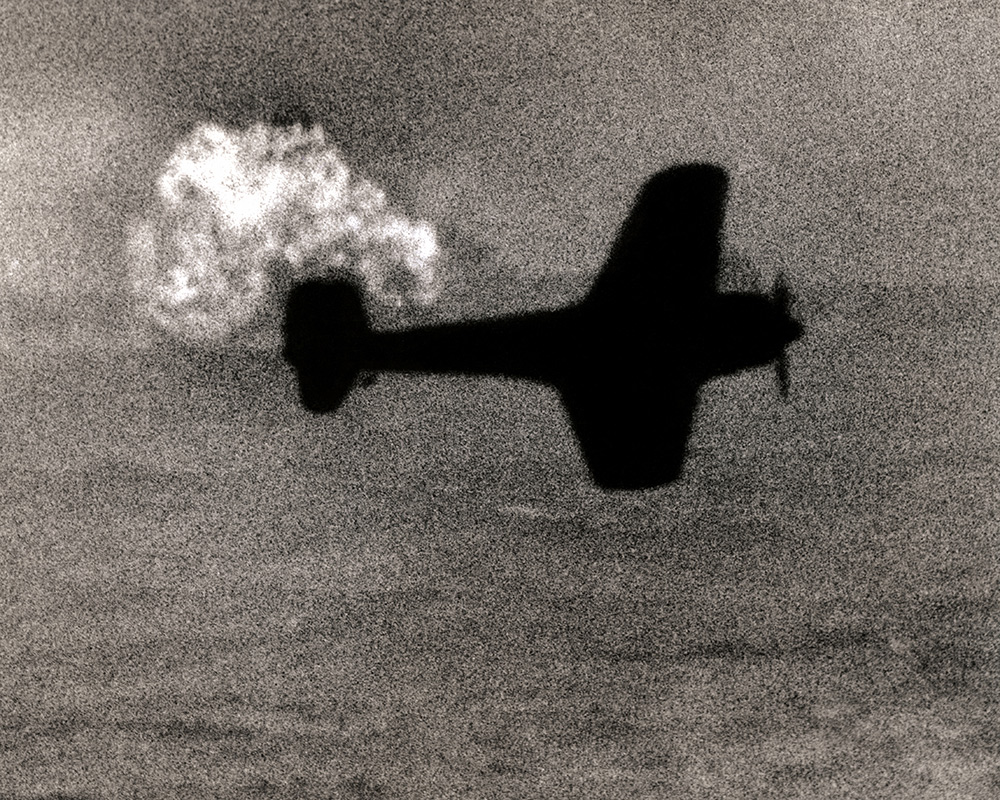
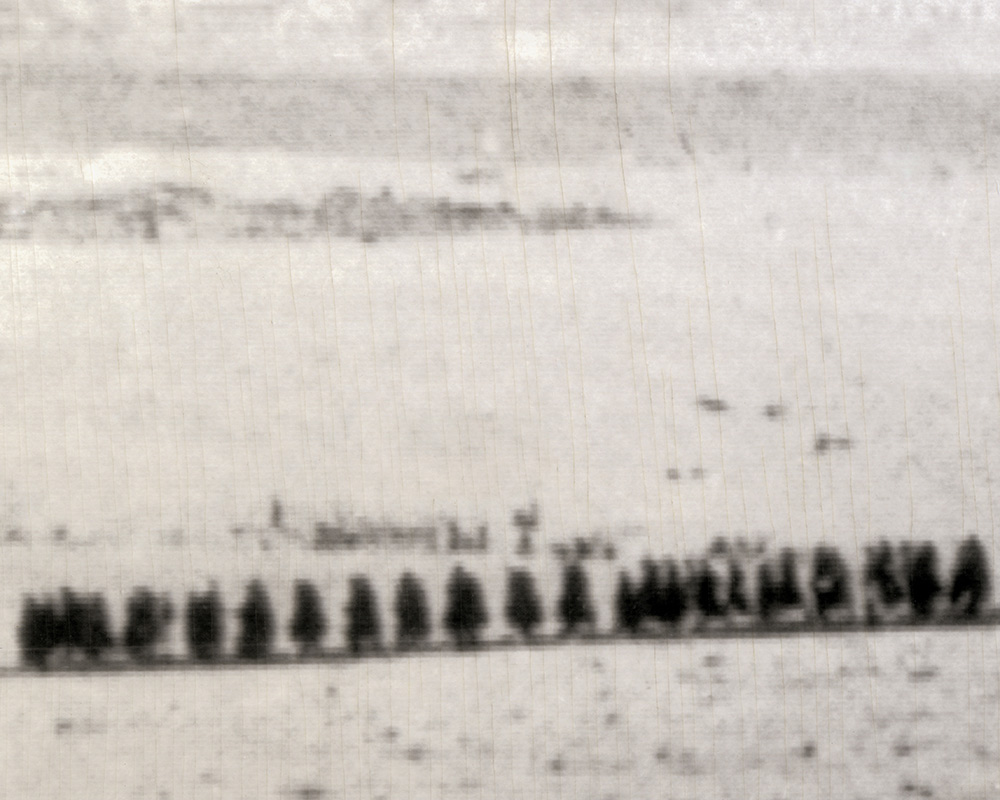
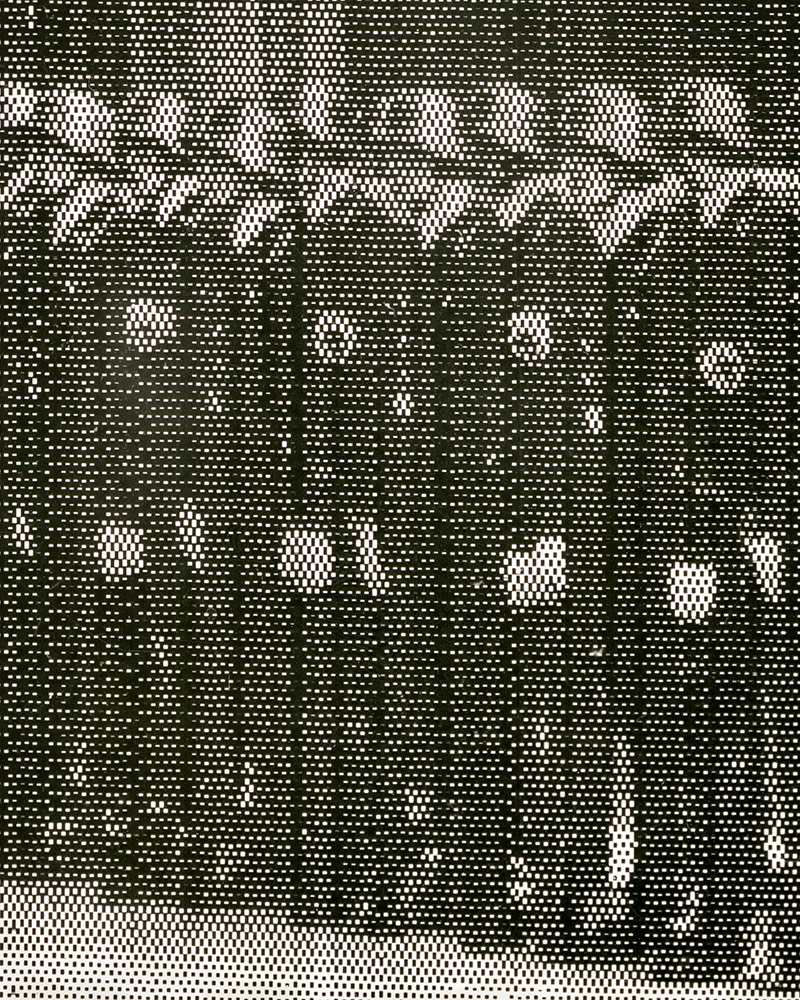
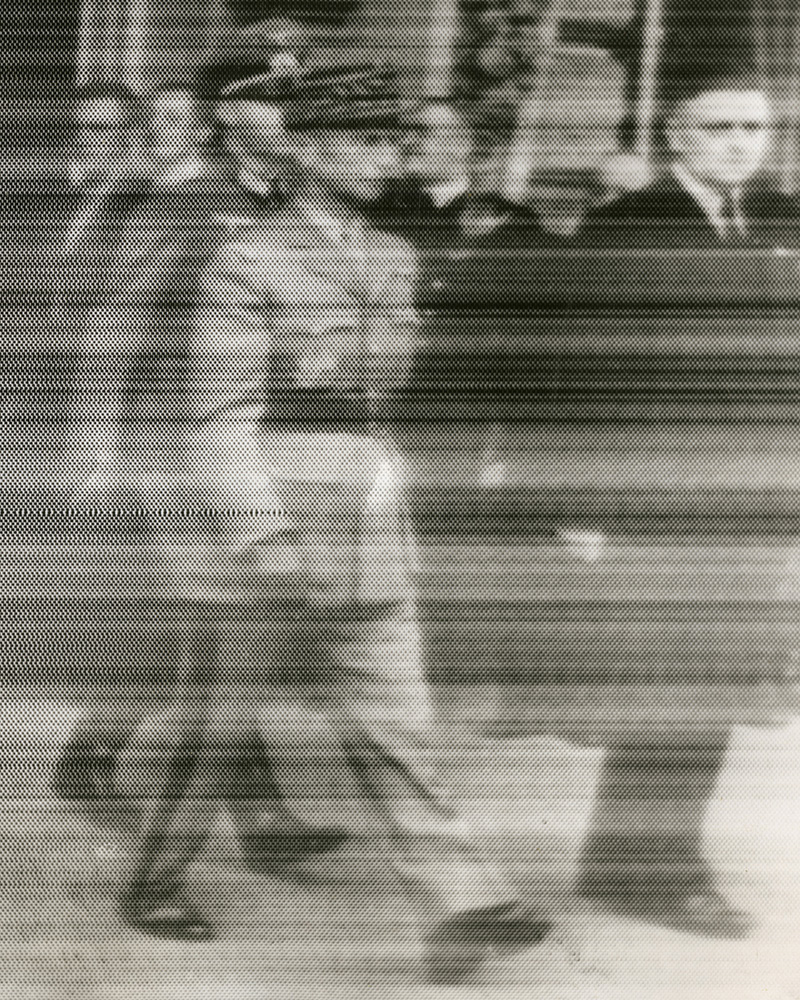
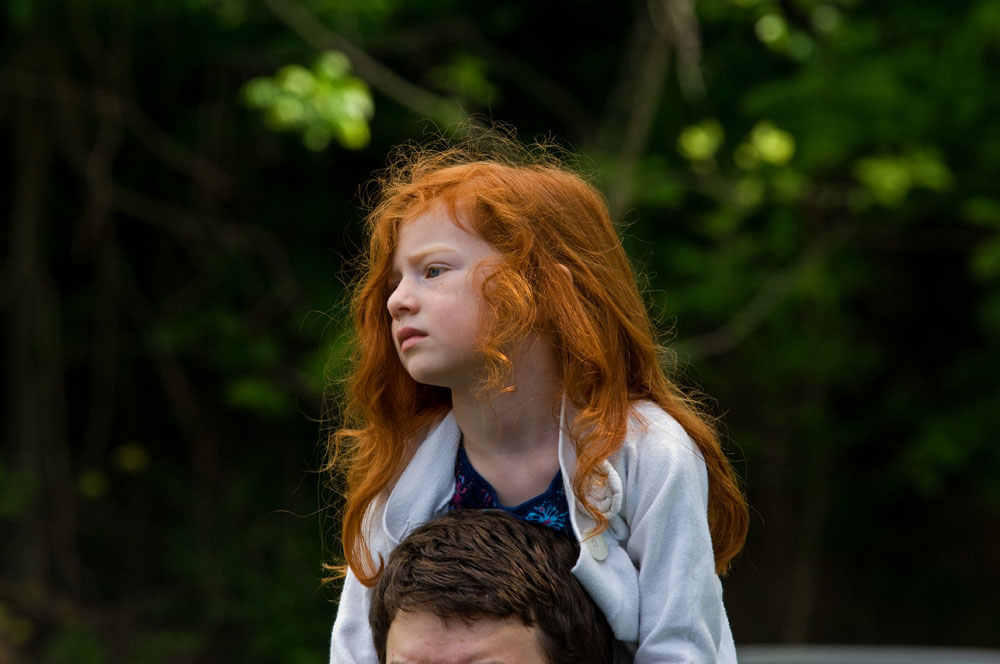
It would be hard to be anything but moved by Joshua Lutz' latest project, "Hesitating Beauty," in which Lutz tries to convey the far-reaching impact that his mother's extreme mental illness had during and after her lifetime.
"Blending family archives, interviews, and letters with his own photographic images, Lutz spins a seamless and strangely factual (yet unflinchingly fabricated) experience of a life and family consumed by mental illness. Rather than showing us what it looks like, "Hesitating Beauty" plays with our conceptions of reality to show us what it feels like to grapple with a family member's retreat from lucidity." ClampArt.
This is the first book review from guest contributor Elyse Weingarten, a freelance writer living in New York.
From Schilt Publishing, photographer Louisa Marie Summer's book, 'Jennifer's Family,' is an intimate offering, capturing the experiences of twenty-six year old Jennifer, a second-generation Puerto Rican, her partner, Tompy, and their four children, at their home in South Providence, an urban area rife with poverty, crime, and high levels of unemployment.
Summer spent over a year with the family, and the results are confounding; in photographs of highly concentrated colors, it is not so much the stark details of the family's life that come into view, but the domestic heroism of Jennifer and Tompy, with their hands-on parenting and ability to survive economically, while often supporting other family members and friends.
With a few exceptions, the photographs in 'Jennifer's Family' were taken in the family's apartment, and at times, there seems to be little variation in theme. In photo after photo, children run through the apartment's cluttered rooms. This is one of the ways in which the book triumphs: life in the domestic realm is repetitious, and its recurrence only adds to the book's rightful claustrophobia. We can see how hard Jennifer and Tompy fight to give their children childhoods, and see how much they hope that if they fight hard enough, they can leverage their children into the next generation's middle class.
With 64 images and text by Mairead Bryne, this book is good for multiple viewings.
(I met Louisa Marie at an ASMP portfolio review two years ago, and I am thrilled to see this book as a result of a project that she had completed with such spirit. - Ed.)
Chris Anthony's sumptuous-looking wet plates are collected into "a magical, mysterious photography book of tintypes, portraits, still lifes and seascapes."
"I've tried to avoid working with a very rigid theme or set of guidelines on this series and have wanted to take pictures of things, people and characters that mean a lot to me personally through themes of solitude, hope and survival. Making the masks, and many of the props and costumes is a big part of the process and it helps me define this unique and demented little world I live and shoot in. There are many still lifes (or portraits rather) of Seahorses, which I find to be one of the most beautiful and fascinating creatures in existence. The mysteries of the sea is certainly a big part of the subject matter in these pictures and I like to think that the book ends with a sort of crescendo of color images of survivors braving waves and currents, perhaps the result of a future world where ocean tides will wash away the planet's coastlines."
There are tons of 'rewards' on his Kickstarter if you fancy funding.
News in from our friends at Snap Galleries in London. "In the gallery for the next four weeks, ending 13 October 2012, we'll be displaying a selection of double page spreads from I saw Nick Drake mounted on the walls. We are showing just over 50% of the book up on the walls, life-size, with each spread measuring a whopping 24 x 36 inches / 60 x 90 cm. When you come to the gallery, you get a sense of the scale of this incredible book."
"Keith Morris's archive is the single most important source of photographs of Nick Drake, with Keith photographing Nick Drake for all three of his albums over a two and a half year period from April 1969 to November 1971. Tragically, Keith died in a scuba diving accident in 2005 but his legacy lives on through his incredible archive of photographs." Read more over at Snap's website.
Panopticon Gallery is proud to announce 'Harold Feinstein - A Retrospective' published by Nazraeli Press. Feel free to pre-order it for my birthday gift.
Feinstein was born in Coney Island, joined the Photo League at 17 years old, and is widely know for his work in New York, indeed helping to define the 'New York School'.
'Harold Feinstein, A Retrospective' is the first career-spanning monograph showcasing the brilliance of a small camera master of black-and-white photography. Feinstein began his career in photography in 1946. Within four short years, Edward Steichen, an early supporter, had purchased his work for the permanent collection of the Museum of Modern Art in New York and exhibited it frequently. Feinstein quickly became a prominent figure in the vanguard of the early New York City photography scene where he exhibited at Helen Gee's Limelight Gallery, was a designer for historic Blue Note Records and was a member of the NY Photo League. Feinstein is best known for his six-decade love affair with Coney Island, which has resulted in a collection unsurpassed by any other photographer. While his Coney Island work is much celebrated, Feinstein's breadth and exposure is far greater. His black-and-white portfolios include photo essays from the Korean War, documentary street work, nudes, landscapes, and still life. Feinstein's photographs have been exhibited in and are represented in the permanent collections of major museums including the Museum of Modern Art, International Center of Photography, and the George Eastman House. "When your mouth drops open, click the shutter." - Harold Feinstein
In stores soon is this new infinitely-readable little book, 'Photographs Not Taken,' brought to you by the bright and brilliant team at Daylight. Author Will Steacy's short essays by photographers is a collection of personal stories about missed opportunities, mistakes, missteps and many other varied vignettes; some of them are glad that they hold the memory instead of a physical manifestation. "Diane Arbus would have done it" states Sylvia Plachy, in hindsight. Other short tales from Mary Ellen Mark, Roger Ballen, Amy Elkins, Mark Power, Jamel Shabazz, Tim Hetherington and dozens more.
Pre-order one now. Great value, great reading, relatable and moving.
It doesn't get much more tantalizing than this: Phaidon releases a 50 x 35 cm limited edition book each with a C-type Lambda print, signed by Steve McCurry.
Most of us will be familiar with McCurry's 'Afghan Girl' from the 1985 cover of National Geographic, and the story of the follow-up years later when McCurry and the magazine eventually found her again. According to Wikipedia "(Sharbat Gula) vividly recalled being photographed - she had been photographed on
only three occasions: in 1984 and during the search for her when a
National Geographic producer took the identifying pictures that led to
the reunion with Steve McCurry. She had never seen her famous portrait
before it was shown to her in January 2003."
McCurry's career in photojournalism began during the Soviet war in Afghanistan when he disguised himself in native dress and sewed his film into his clothes, and he has continued to cover international conflicts. A regular contributor to Nat Geo, McCurry is of course also a member of Magnum.
'Steve McCurry: The Iconic Photographs' includes images from the streets of India, the temples of Angkor in Cambodia and the Buddhist monasteries of Tibet.
Stella Kramer had been raving about Jennifer Shaw's 'Hurricane Story'. I was excited when she shared an early copy of the book - we both completely embraced the concept, execution and format. Jennifer Shaw was heavily pregnant when Hurricane Katrina arrived. Hitting the road with dogs, cats and husband they made their way to safety and an unknown midwife.
From Chin Music Press, the publisher:
"'Hurricane Story' is a tale of exile, birth and return told in forty-six photographs and simple, understated prose. This first-person narrative, illustrated through toys and dolls photographed with an inexpensive toy Holga camera, depicts Jennifer Shaw's strange but true tale of her evacuation from New Orleans, including the dramatic birth of her first son on the very day that Hurricane Katrina made landfall, the pressures on her marriage as she and her husband struggle with depression and rage, and their return to New Orleans with their newest family member in time for Mardi Gras. Rob Walker, 'Consumed' columnist for The New York Times Magazine, has written the book's poignant Foreword."
The simplicity of this book, and every image in it, is exceptionally engaging; everything about it just works. I strongly suggest you treat yourself to a copy, and at $18, you can also buy one as a gift.
"When we arrived at the hospital, it was time."
After the birth "We took our hurricane sideshow on the road."
Returning home "The city was strangely peaceful."
"FEMA hauled off our downed trees."
Home for Mardi Gras "Anointed in glitter, we reclaimed the streets."
Paolo hit me up with this ongoing project on Stone Town, Zanzibar. According to Wikipedia the name comes from the ubiquitous use of coral stone as the main construction material; this stone gives the town a characteristic, reddish warm colour. Stone Town's architecture has a number of distinctive features, as a result of Arab, Persian, Indian, European, and African traditions mixing together.
Personally, I'm irreligious, but I do love people and culture and beautiful imagery, and helping publicize new images from hard-working photographers. Teamed with a delightful statement from Paolo, we bring you a selection from his new Blurb Book.
"Hidden by mass tourism, victim of an erroneous and monolithic view of
the muslim world, and subordinate to a culturally different mainland
following decades of unwanted political union, the muslim Swahili
culture of Zanzibar tries to survive against all the odds. Simply by
carrying on with their daily life, by being proud of their traditions
and by not forgetting the magnificence and splendour of what the Swahili
culture once was, the people of Zanzibar are trying to preserve
their heritage, as well as to avoid the temptations of the western world
that day after day, through the constant coming and going of tourists,
risk destroying a place rich with culture and history.
My
personal experience in Zanzibar started by chance following a 3 day
stop-over on my way back from Australia to Italy, a stop that turned out
to be the beginning of a long-term personal project about the Swahili
culture, a work in progress that is paying me back with a huge amount
of experiences, feelings and emotions that will remain with me for the
rest of my life, a work in progress that hopefully will give justice to
this fascinating culture.
The experience time after time of
seeing the local people I have met during my stays, the joy of watching
their children growing up, the opportunity of being considered one of
them, to think of them as individuals with a personal story... this is
the magic of photography. Breaking barriers, diving deep in a culture
and its people, or as the photographer Bruce Davidson once said, trying
to document the story that the subject tells me, rather than the one I
want to tell."
Martin Brink has a piece in Illiterate Gallery's The Big Picture show, now on in Denver. The print is from his new series 'Trash in Grass' which reflects Martin's usual brilliantly tongue-in-cheek observations of what's immediately in front of him.
He's been busy so there's also an interview with Urbanautica, and his book 'The Daily Round', images from which previously seen here in aCurator, is featured at Various Points.